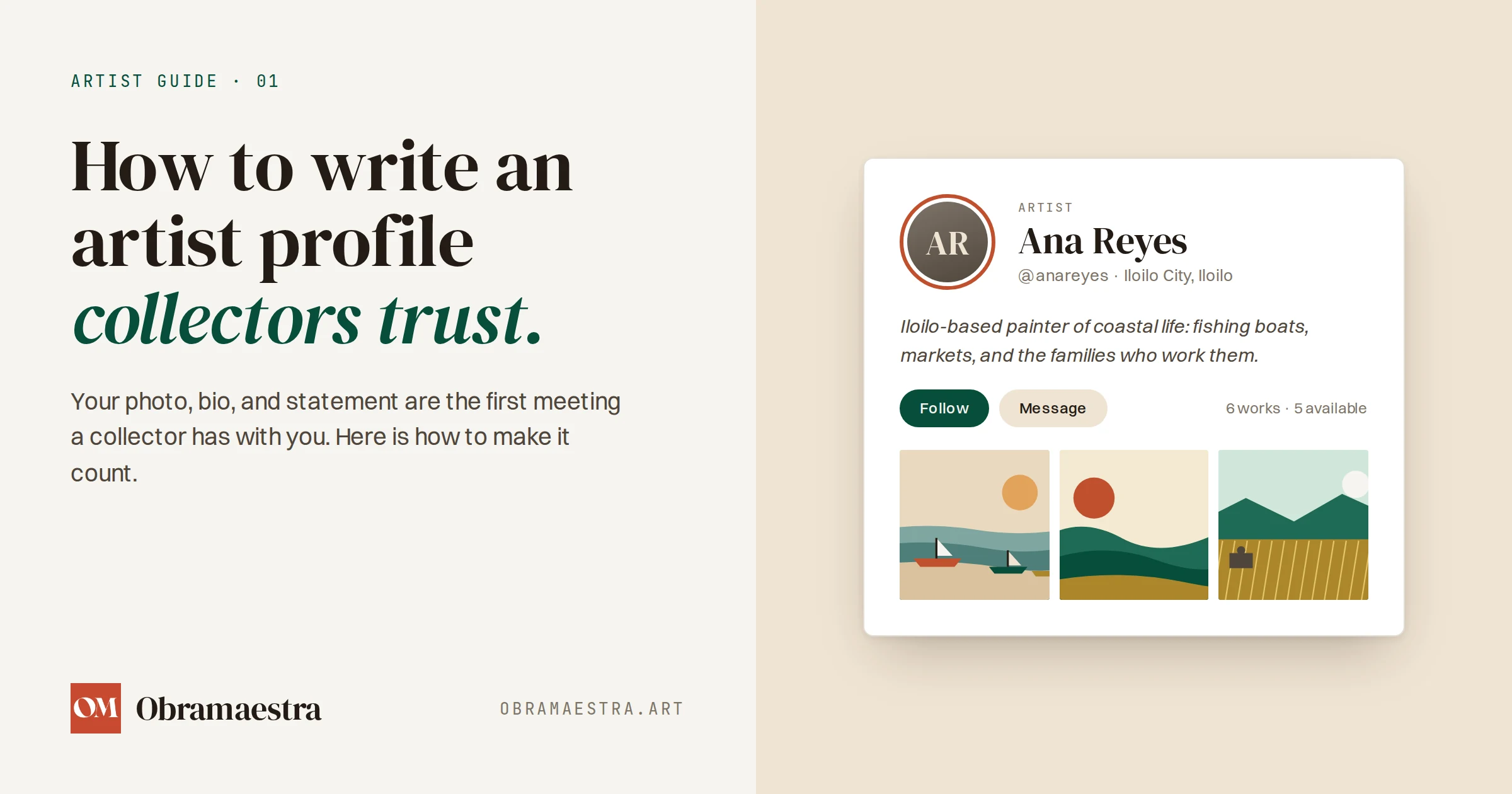
A collector buying online never meets you. There is no opening night, no handshake, no chance to ask about the painting over coffee. Your profile stands in for that first meeting, and most collectors read it before they decide whether a price feels fair.
This guide walks through every part of your profile, what collectors look for in each one, and how to fill it in. Set aside about twenty minutes. You only have to do it properly once.
What collectors check, and in what order
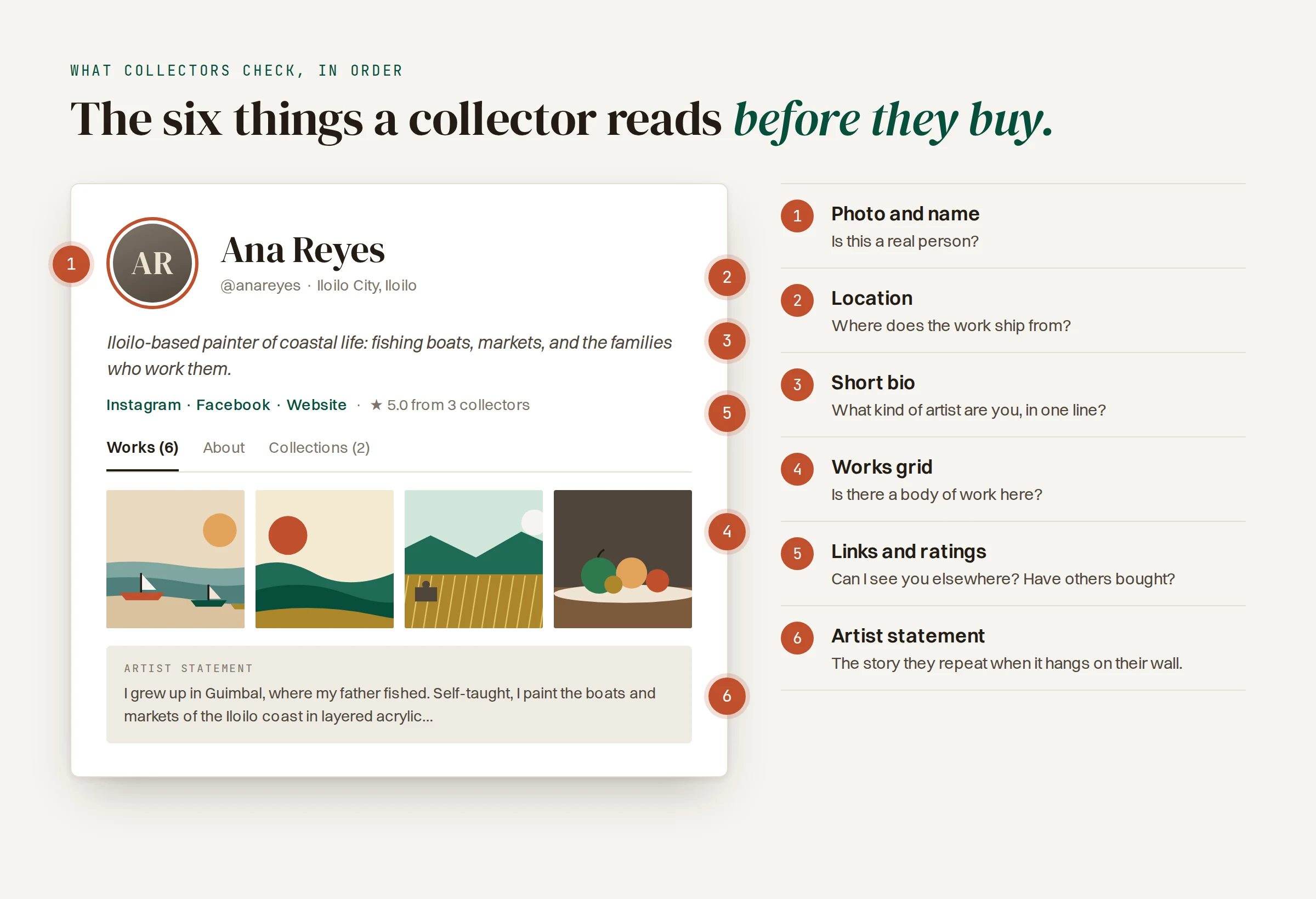
The path is usually the same. A collector finds one of your artworks, likes it, then taps your name to see who made it. On your profile they scan in roughly this order:
| Order | What they check | What they want to know |
|---|---|---|
| 1 | Your photo and name | Is this a real person? |
| 2 | Your location | Where is the work coming from? |
| 3 | Your short bio | What kind of artist are you, in one line? |
| 4 | Your works | Is there a body of work here, or a single piece? |
| 5 | Your links and ratings | Can I see you elsewhere, and have others bought from you? |
| 6 | Your artist statement | What is the story behind the work? |
Only collectors already leaning toward buying get as far as your statement, which is exactly why it matters.
The basics
These take five minutes and do more for trust than anything you write.
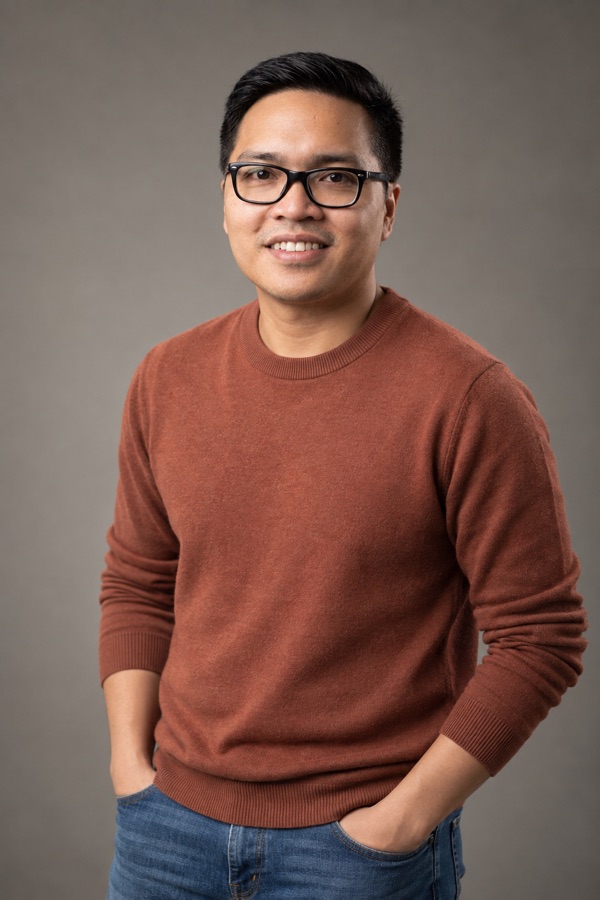
Profile photo. Use a clear photo of your face, ideally in your studio or beside your work. A logo or a painting as your avatar reads like a shop, and collectors here want to buy from a person. Daylight, no heavy filters, face visible at thumbnail size.
Display name. Use the name you sign your work with. If collectors know you by a studio name, put your real name first and the studio name in your bio, so the name on the canvas matches the name on the page.
Location. Add your city and province. It tells a collector where the piece ships from, and many like knowing a work came from Cebu, Tacloban, or Bulacan. It is part of the story, not just logistics.
Links. Add your Instagram, Facebook, and website if you have one. They are free on every plan. A collector who can scroll two years of your posts sees a working artist with a history. Link only accounts that show your art.
Username. Your username is part of your profile link, so keep it close to your name and pick one you are happy to keep.
Your short bio
The short bio sits right under your name. It is also what shows when someone shares your profile link on Facebook or Messenger, and what Google shows under your name in search. It has to work on its own, for a stranger who has never seen your art.
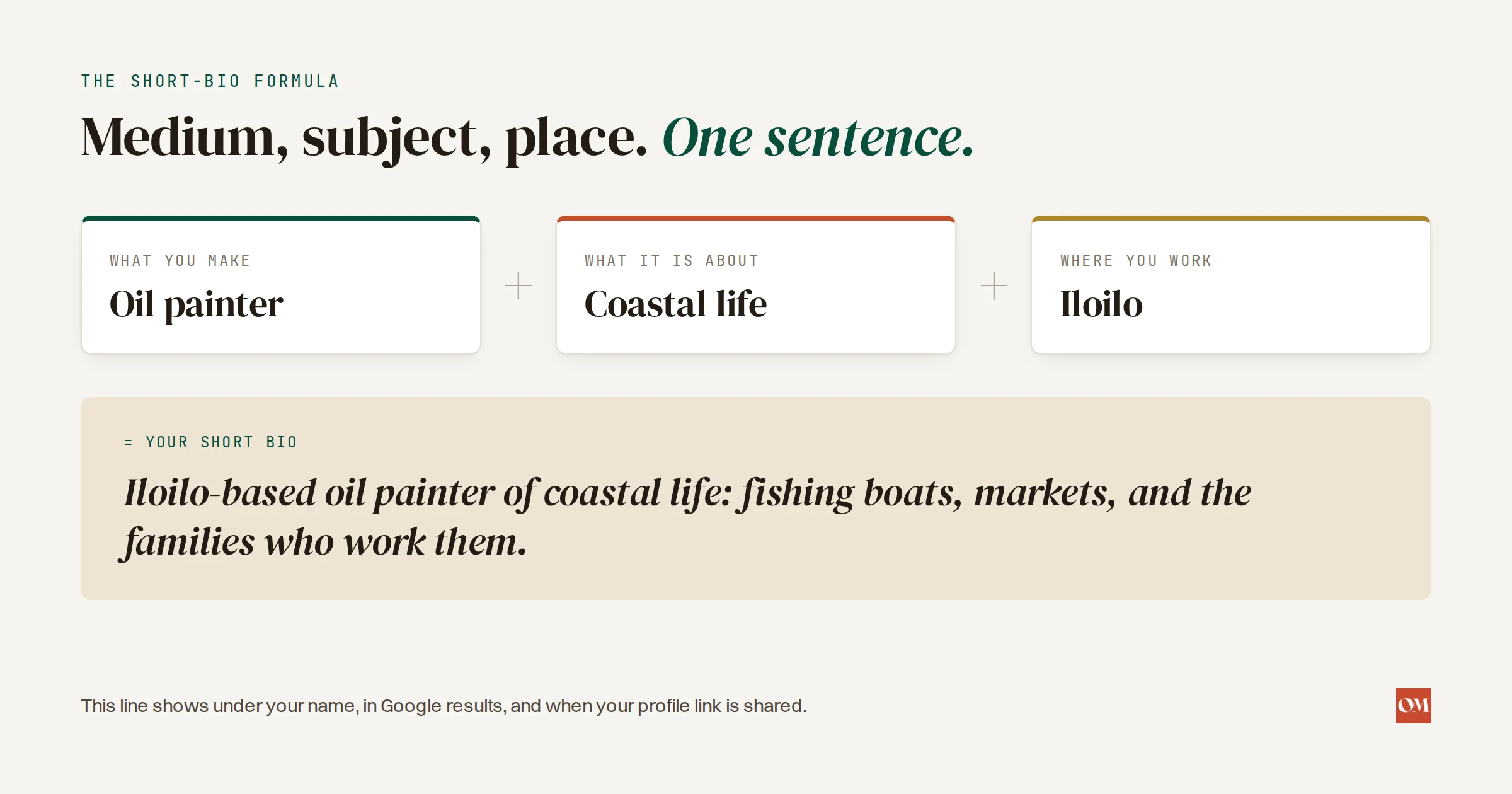
A good short bio names three things: what you make, what it is about, and where you work. Compare:
| Before | After |
|---|---|
| Passionate about art. | Iloilo-based oil painter of coastal life: fishing boats, markets, and the families who work them. |
| Visual artist. | Self-taught watercolorist from Baguio. Small, quiet studies of pine forests and Cordillera mornings. |
| Abstract. | Abstract painter from Quezon City working in heavy-textured acrylic. Large pieces made for living rooms and lobbies. |
The rewrites name a medium, a subject, and a place. A collector searching for "Iloilo seascape" or "textured abstract" can find you, and one who lands on you knows within seconds whether your work fits their wall.
Your artist statement
The statement lives in your About tab. Collectors who open it are already interested, so give them the story they will repeat to friends once the piece is on their wall. Three short paragraphs is enough.
Where you come from. Your hometown, how you started, and what you trained in, formally or not. "Self-taught" is a perfectly good answer.
What your work is about. Your recurring subjects and why they matter to you. Be specific. "The fishermen of my father's barangay in Leyte" lands harder than "Filipino culture."
How you make it. Your materials, your process, how long a piece takes. If you want to go deeper, The Creative Independent has a thorough guide on how to write an artist statement.
Write it in first person, the way you would explain your work to a visitor at a show. Plain language beats art-school language, a point The Creative Independent makes well in the language of artist statements. If English feels stiff, write it in Filipino or Bisaya first, then translate. Your natural voice is what makes it believable.
Avoid a single abstract line like "I create because I must." It sounds heartfelt to you, but it gives a collector nothing to hold on to, and it makes a ₱50,000 price harder to justify.
Awards and exhibitions
Your profile has its own section for awards and exhibition history. Add group shows, competitions, residencies, and commissions, even small or local ones. A collector reads a list like this as proof that other people have already taken your work seriously.
If you have none yet, leave it empty. Collectors buy work they connect with, not résumés.
Category, mediums, and being found
Your About tab shows your category and the mediums you work in. Collectors filter by category, medium, province, price, and size, on the browse page and on the Artists page.
Be accurate, not broad. If you paint in acrylic, say acrylic. Labelling everything mixed media to appear in more places means you disappear for everyone filtering by acrylic.
Keep your location precise. Province is a filter. A collector in Davao looking for local work, or a designer who wants pieces that ship quickly, will narrow by province first.
Your works are the proof
Words build interest. Your works are what convince. One listing looks like someone testing the water. Five or more pieces in a consistent style looks like a working artist, and collectors pay accordingly.
- List at least three available pieces. That is also the bar for the Founding 100 Artists program: a complete profile plus three available artworks earns a numbered Founding 100 badge on your profile.
- Group related work into collections on your profile, such as a series of seascapes or a set of still lifes.
- Leave sold work up. Sold pieces stay on your profile, and a sold listing invites collectors to message you about a commission.
- Earn ratings. Once an order completes, buyers and artists rate each other. Pack well, ship on time, and reply quickly.
The verified badge is a manual check by our team. If you would like to be considered, reach us through our contact page.
Before you share your profile
- A clear photo of your face, in daylight.
- Your display name matches the signature on your work.
- City and province filled in.
- A short bio that names your medium, subject, and place.
- An artist statement that covers your background, your subject, and your process.
- Instagram, Facebook, or website linked.
- At least three available artworks listed.
- Your own profile opened while logged out, so you see it the way a collector does.
If you would rather not do this yourself
Turn on Profile management in your Dashboard, under Account. Our team can then help you write and edit your profile with you.
When your profile is ready, the next step is your first listing. Our guide to listing your artwork, step by step walks through the form. Once you are live, where to put your Obramaestra link covers how to share it.