
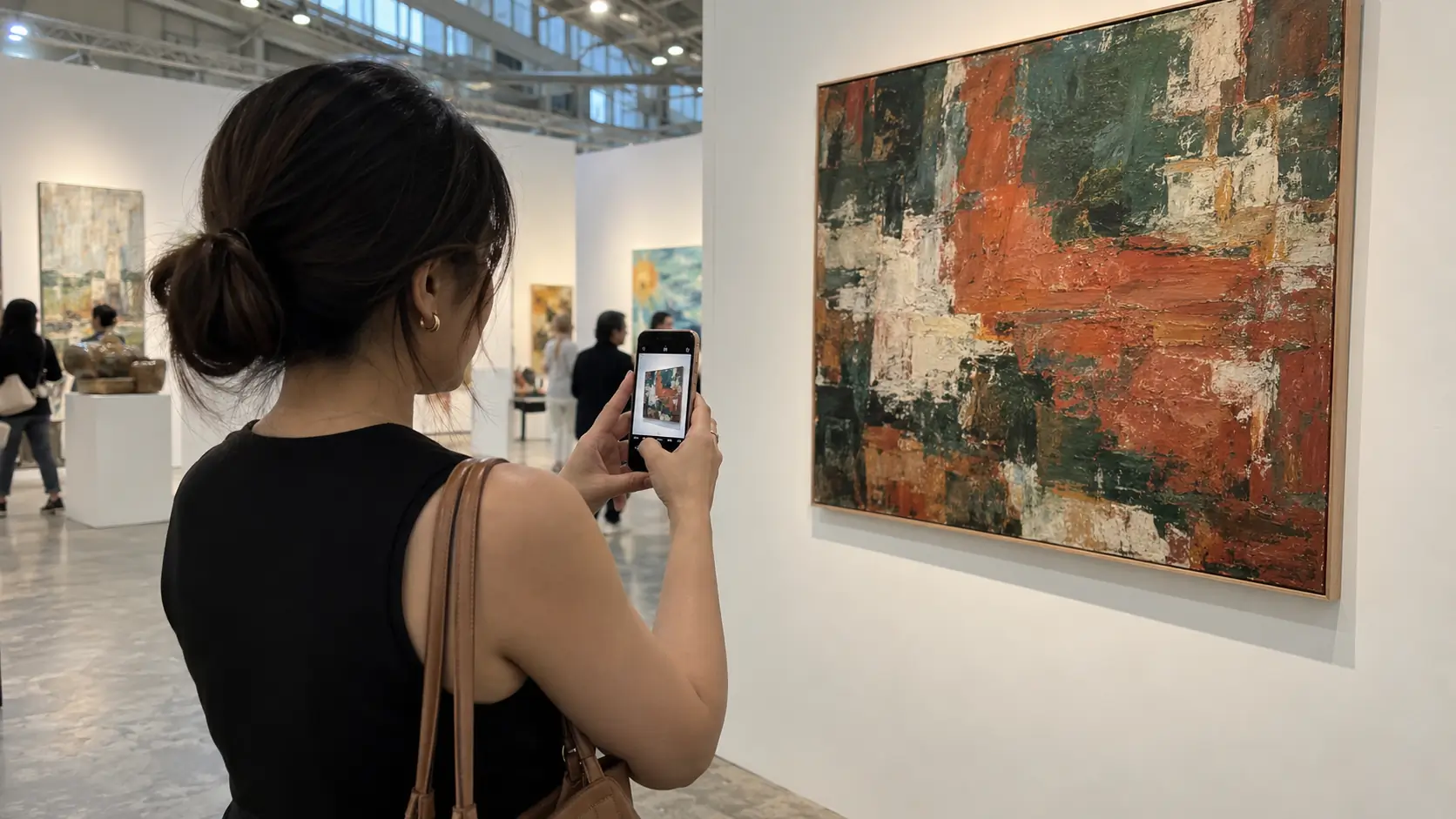
Art Fair Philippines 2026 ran for three days, February 6 to 8, at Circuit Makati. Around 50 exhibitors filled the floors, and regular admission was ₱750. If a painting stopped you in your tracks, you had one weekend to decide, with a small wall label to go on.
That is the tension in buying art in art fairs vs online marketplaces. A fair lets you stand in front of the work, but it rushes the decision and hides what sits inside the price. An online marketplace is open every day, but you cannot check the texture with your own eyes.
The short answer: look at fairs, and buy online when you want a lower commission and protected payment. This guide compares both on seeing the work, what the price includes, who stands behind the sale, and what happens if something goes wrong.
We built Obramaestra, so we also say where we are not the right fit. Obramaestra serves buyers in the Philippines only, and every order ships to a Philippine address.
Table of contents
What does a three-day art fair give you that a website cannot?
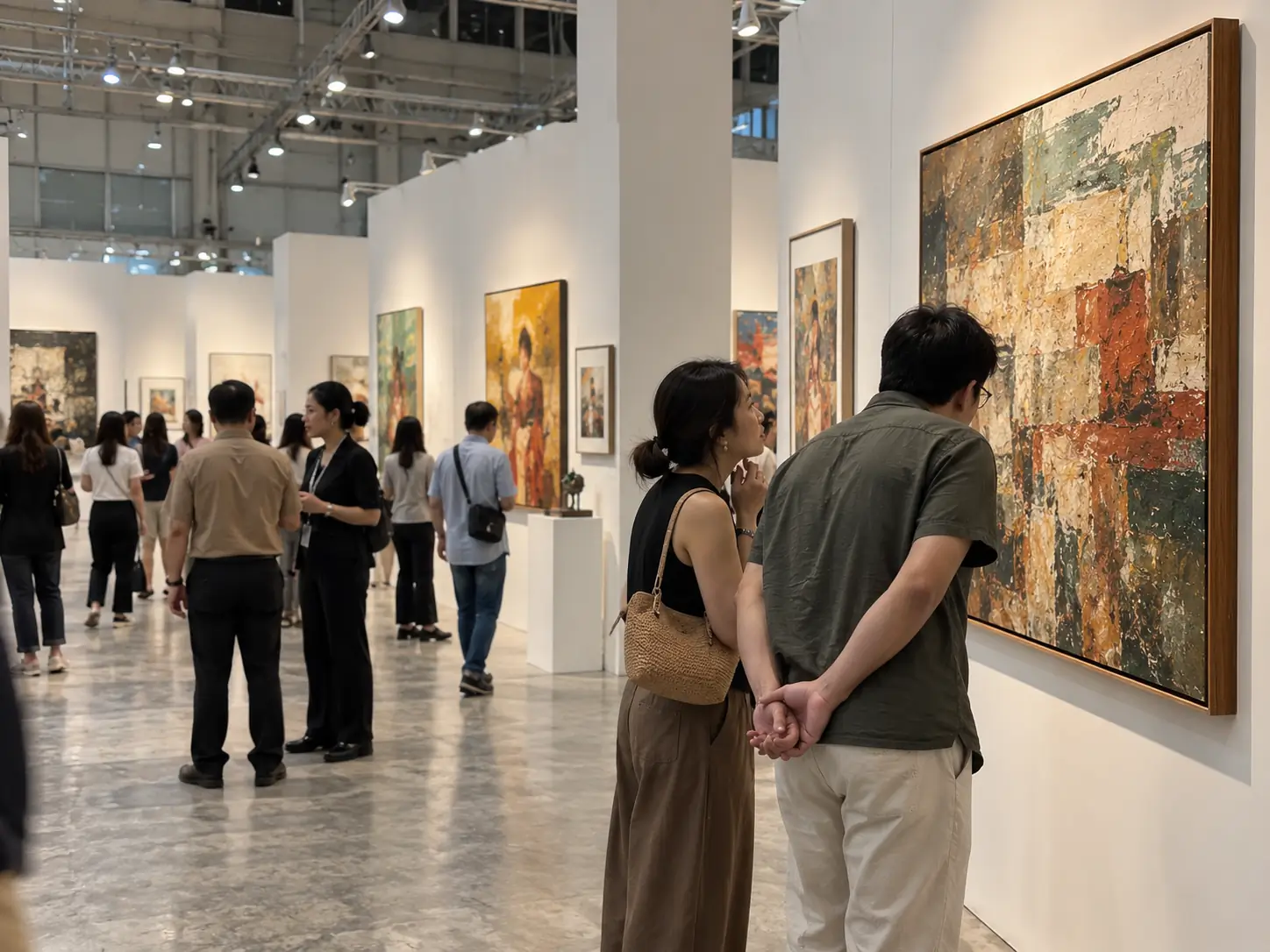
An art fair gives you three things a website cannot: the real size of the painting, its surface up close, and a conversation with the gallery that represents the artist. At Art Fair Philippines 2026, about 50 exhibitors showed work in one building over three days. That makes a fair the fastest way to train your eye, even if you later buy elsewhere.
Here is what that looks like in the room:
- Scale and surface. A 36x48-inch canvas feels different in person than at 1,200 pixels wide. You see paint thickness, varnish sheen, and how the colors hold up in real light.
- Answers on the spot. Gallery staff can explain an artist's recent shows and how a series developed.
- A learning program. The fair runs daily ArtFairPH/Talks with the Ateneo Art Gallery and the Museum Foundation of the Philippines.
Where do art fairs make buying harder?
Art fairs make buying harder because the window is short, the setting is pressured, and the price comes with no breakdown. Art Fair Philippines runs about three days a year in Makati, largely through galleries, so collectors outside Metro Manila pay for travel first and artists without a gallery are rarely shown. One number on a wall label does not say what the artist earns or what delivery costs.
The same setup that makes a fair exciting makes it a risky place to spend ₱30,000 or more:
- Travel before you see anything. A collector in Davao or Cebu pays for the trip before seeing a single canvas.
- Pressure. Crowds and "someone else is interested" push people to decide in twenty minutes.
- A gallery-shaped selection. A strong painter in Iloilo with no gallery is simply not in the room.
- Paperwork that varies by booth. One gallery hands you a detailed invoice. Another hands you a handwritten note.
How much do gallery commissions add to the price of art in Manila?
Gallery commission markups in Manila are not published, but the industry standard is a roughly 50/50 split between artist and gallery, with a common range of 40% to 70% by gallery tier. If an artist wants to take home ₱20,000, a 50% commission puts the price at ₱40,000. Obramaestra charges artists a flat 15%, which puts the same painting at about ₱23,529 plus shipping.
A roughly 50/50 split is a common arrangement in the primary market. One legal guide for artists puts emerging-artist spaces at 40% to 50%, mid-tier galleries at 50% to 60%, and prestigious ones at 60% to 70%. Splits can also shift with the cost of taking part in a fair.
That commission is not padding. It pays for the rent, staff, promotion, and booth fees that put the painting in front of you. The question is whether you need those services for the work you are buying.
Here is the arithmetic when an artist wants to take home ₱20,000:
| Route | Seller's share | Price the collector sees |
|---|---|---|
| Gallery, 40% commission | 60% | ₱33,333 |
| Gallery, 50% commission | 50% | ₱40,000 |
| Obramaestra, 15% commission | 85% | ₱23,529 plus shipping |
| Direct sale on social media | 100% | ₱20,000 |
This is arithmetic, not a quote from any Manila gallery. Some artists absorb the commission instead of raising the price. Either way, someone pays it: you, or the artist whose work you are buying.
On Obramaestra, the commission is charged only when a piece sells, and you pay the listed price plus shipping at checkout. Our guide to the best platform to sell art in the Philippines shows the same math from the artist's side.
What do you gain and lose when you buy local art online?
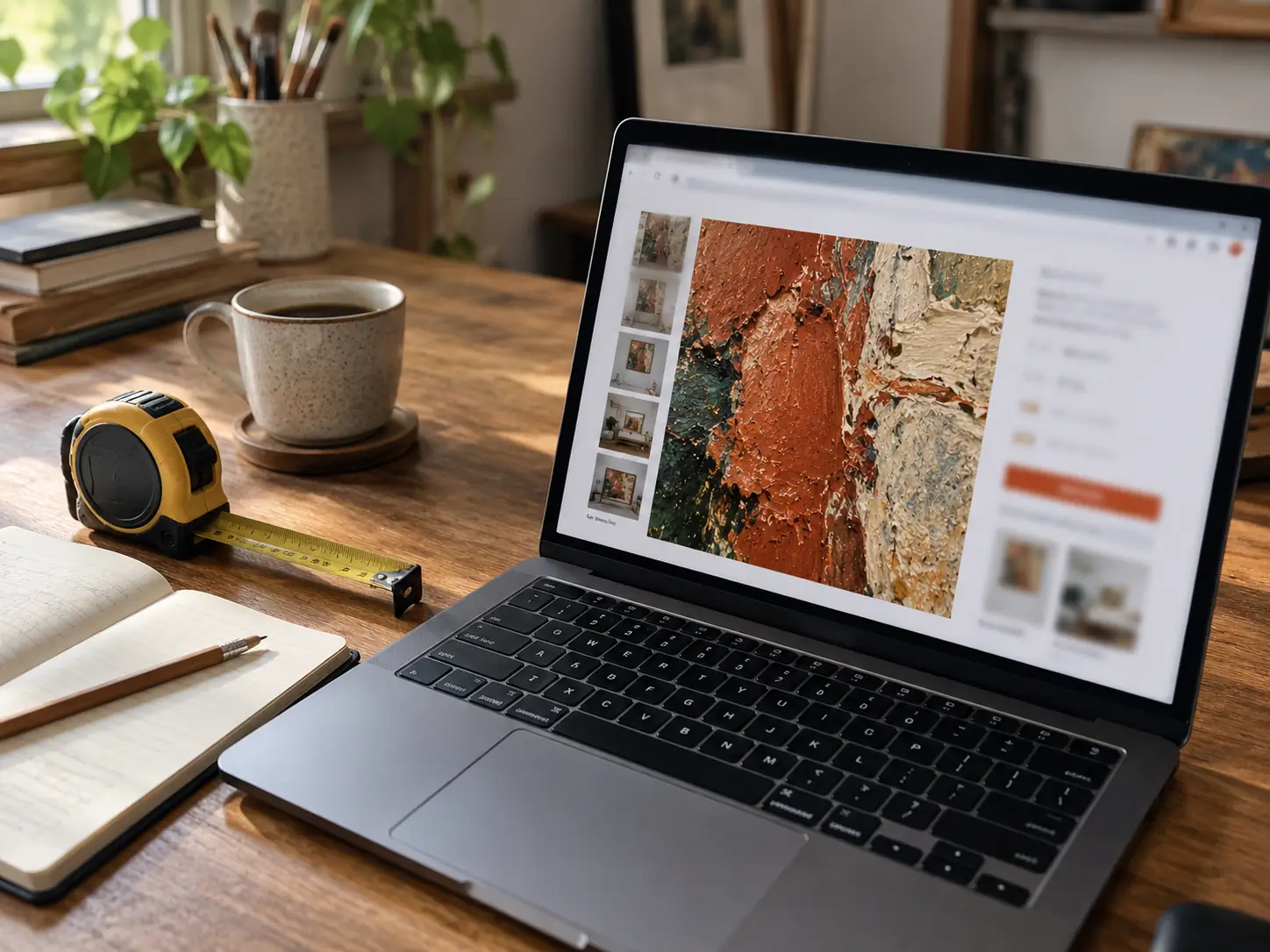
Buying local art online gives you daily access, filters by province, price, and size, direct questions to the artist, and payment held in escrow. It takes away the chance to see the paint in person. On Obramaestra, refunds cover a piece that does not arrive, arrives damaged, or does not match its listing, but there are no change-of-mind returns.
What you gain:
- Time. The catalog is open every day, so you can sleep on a purchase.
- Reach. You can filter the whole gallery and find artists no booth in Makati would show you.
- Direct answers. Ask the artist about size, framing, and the story behind a piece in a comment on the listing, or send them a message.
- Protected payment. Escrow releases to the artist after you confirm delivery, or 14 days after the order is marked shipped. The how it works page shows the full timeline.
- Peso payment. Pay with GCash, Maya, GrabPay, ShopeePay, QR Ph from your bank app, online banking, or BillEase installments.
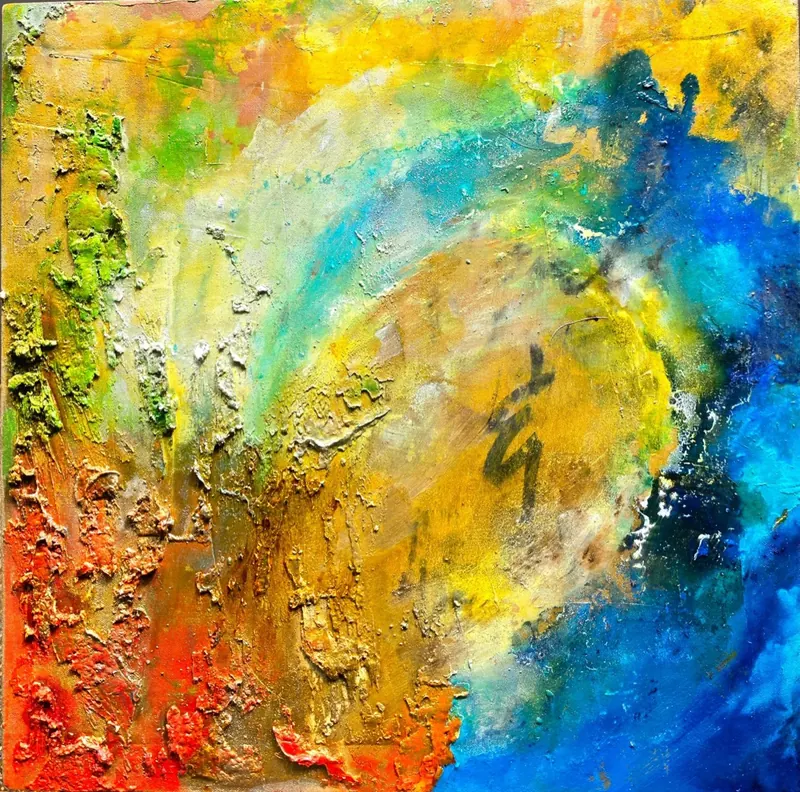
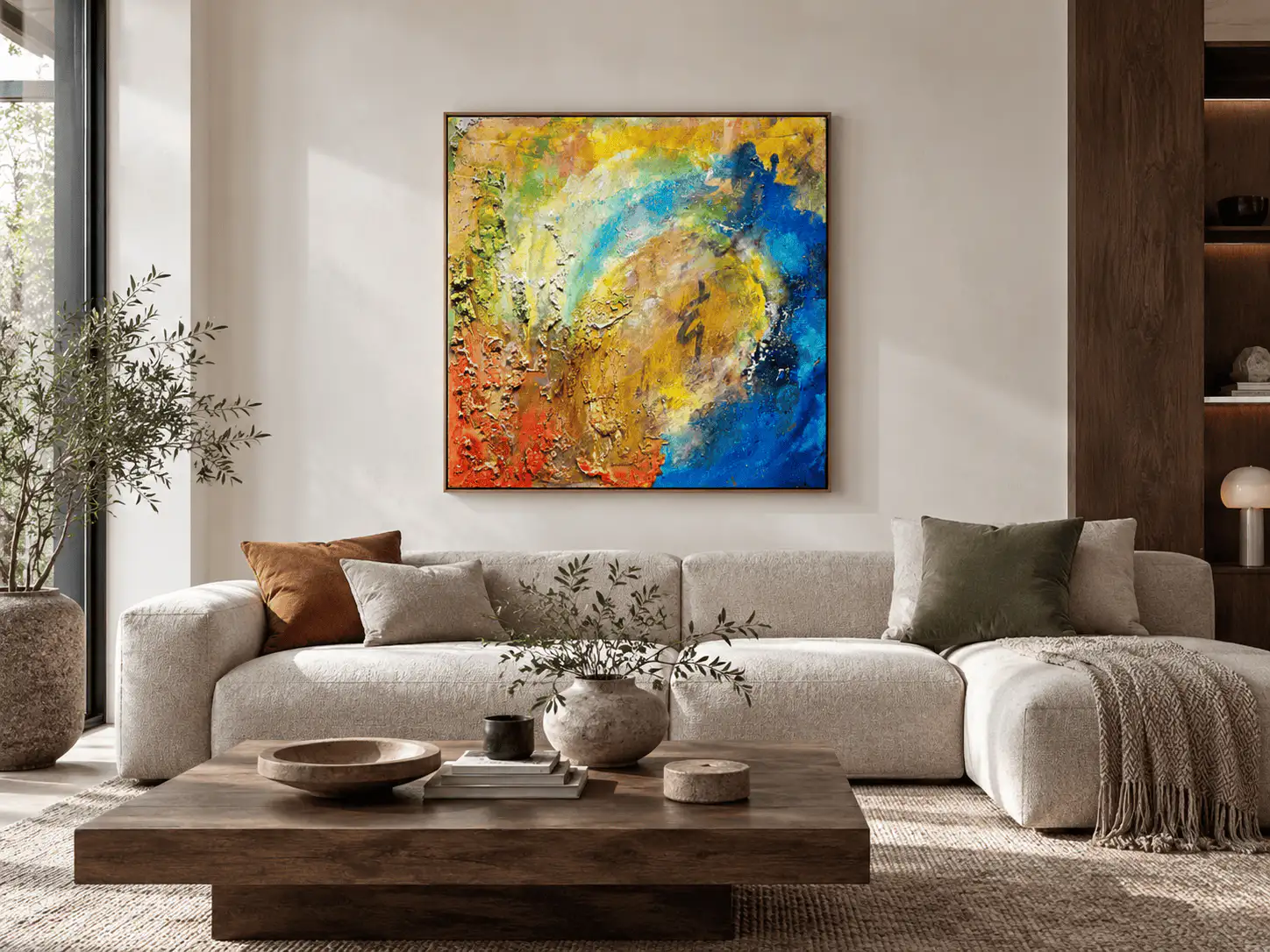
What you give up is real. A screen cannot show you the weight of the paint. Our listings narrow the gap with detail shots, a person-for-scale reference, and room previews, as on Harmony of the Fields, but it is still a photo.
There are also no change-of-mind returns, because every piece is a one-of-one original. You request a refund before escrow releases, and the returns policy explains how return shipping is reimbursed.
What are the best Art Fair Philippines alternatives?
The best Art Fair Philippines alternatives are ALT Philippines for experimental work, Art in the Park for lower-priced originals, online galleries such as Vintana and Cartellino for represented artists, auction houses for historical works, and Obramaestra for original paintings direct from living Filipino artists. Each suits a different budget and a different level of certainty about what you are buying.
| Route | When it is open | Best for |
|---|---|---|
| ALT Philippines | A few days in February (Feb 12 to 15 in 2026) | Experimental, mixed media, and cross-disciplinary work |
| Art in the Park | One day a year, Salcedo Village, Makati | Lower-priced originals; the 2018 edition capped works at ₱50,000 |
| Online galleries (Vintana, Cartellino) | Every day | Represented contemporary artists, at gallery prices |
| Auction houses (Leon Gallery, Salcedo Auctions) | Scheduled sales | Historical works with documented provenance |
| Obramaestra | Every day | Originals direct from living Filipino artists, paid via escrow |
Art in the Park is billed as an affordable art fair, and its price cap changes by year, so check the current edition before you go. For a closer look at galleries, auctions, and social media sellers, read our guide to where to buy authentic Filipino art online. We compare the online galleries with Saatchi Art in our roundup of Artsy alternatives for Philippine art.
How do you buy local art online without regret?
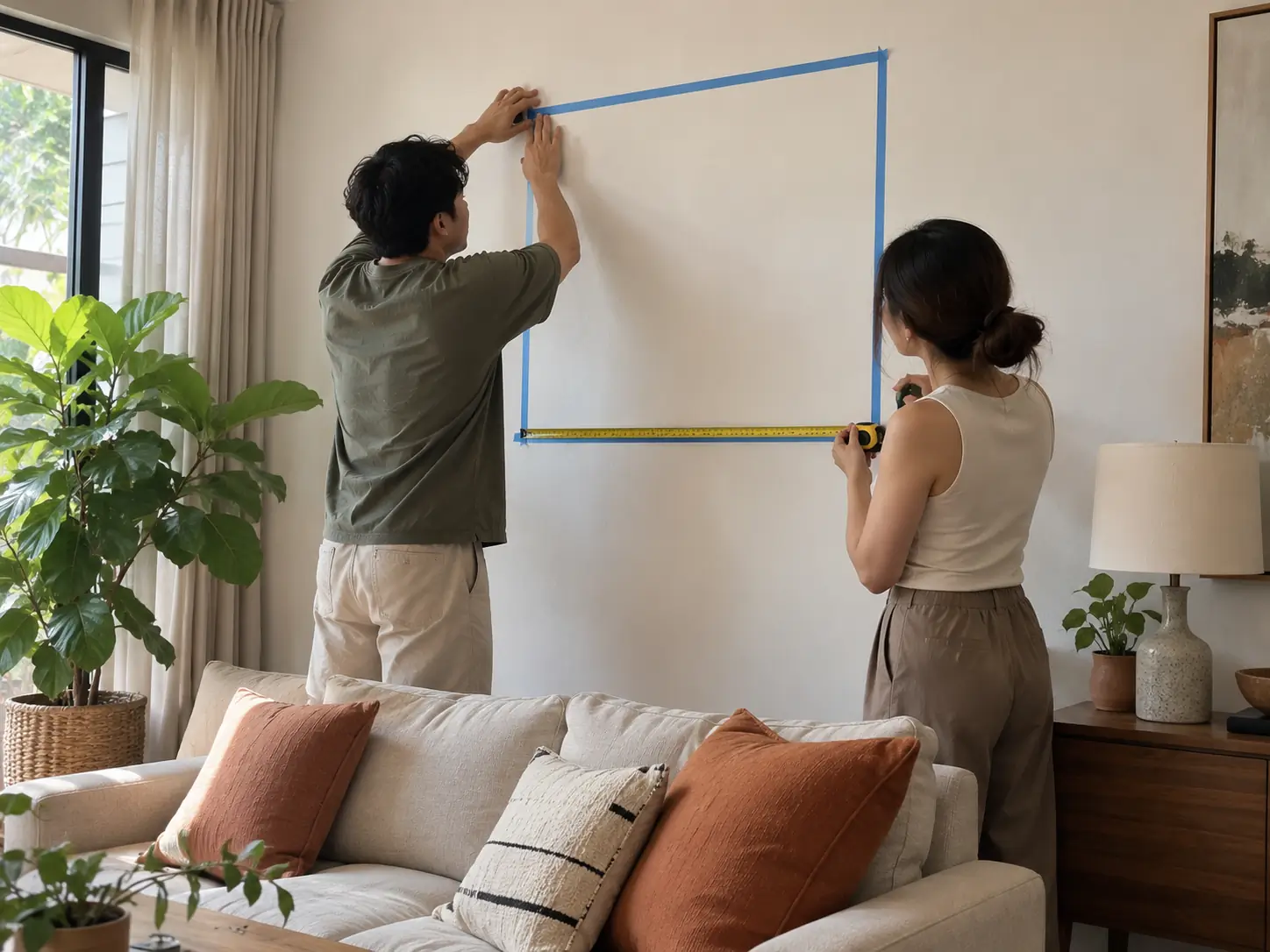
To buy local art online without regret, run four checks: tape the painting's exact size on your wall, ask for a side-lit photo and a photo of the back, read the artist's profile history, and pay through escrow or a method you can reverse. These steps remove most of the risk of a painting that looks different once it is home.
- Measure the wall. Mark the exact width and height with painter's tape. A 24x36-inch piece looks smaller than people expect, and a 48-inch piece takes over a room.
- Ask for what a screen hides. Request a side-lit photo, a close-up of the signature, and a photo of the back. Our six-step authenticity check covers what to look for.
- Read the artist's profile. Past works, process photos, and a real way to reach the artist tell you more than one polished photo. Browse artists and collections to see how a body of work holds together.
- Pay in a way you can reverse. Escrow or a written return clause protects you. A transfer to a personal account does not.
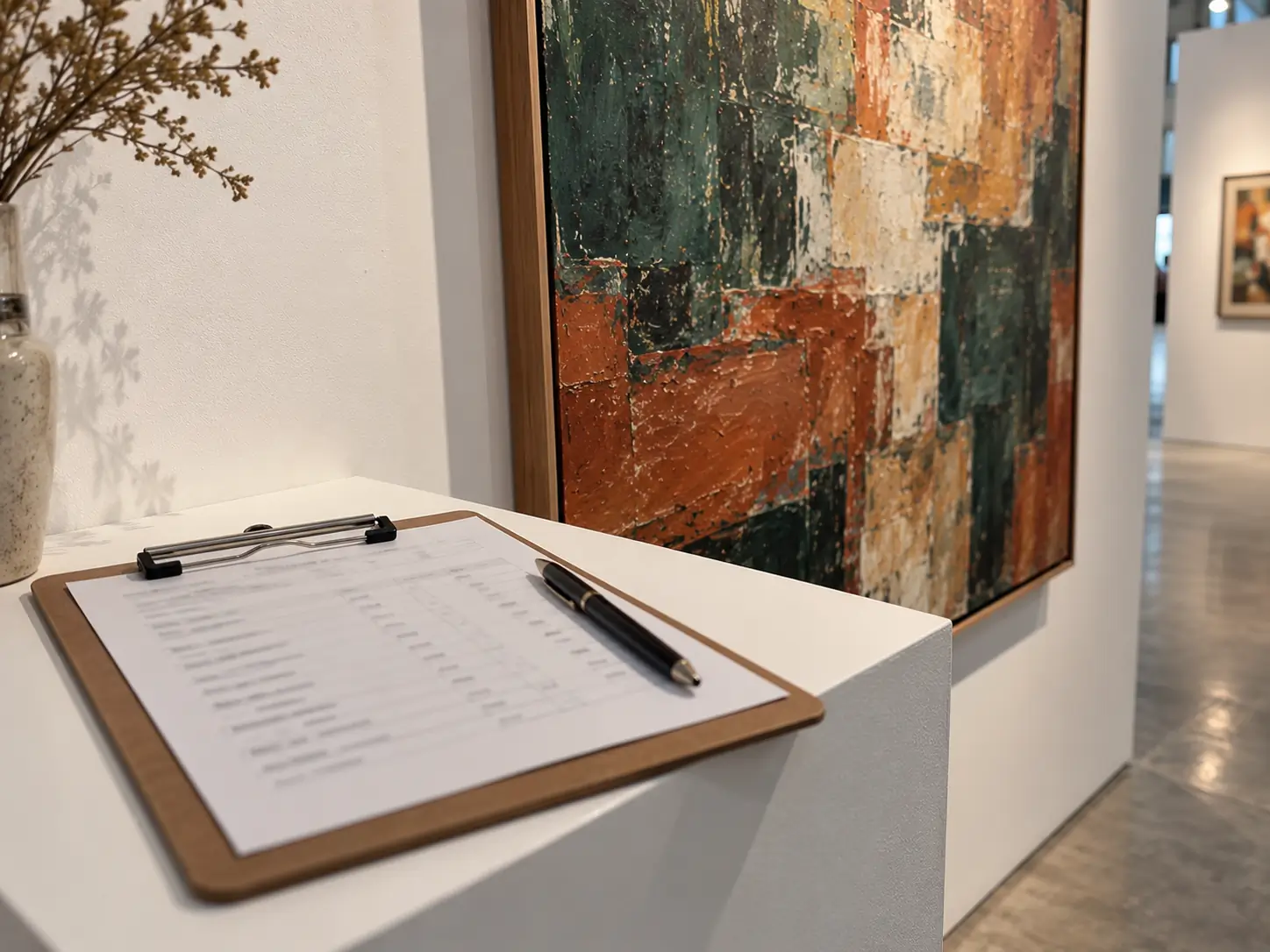
If you buy at a fair instead, get four things in writing before you pay:
- An invoice. It should name the artist, title, medium, dimensions, and year.
- The certificate. Ask who issued it and how to reach them.
- What the price includes. Confirm framing, delivery, and any hold or deposit terms.
- The artist's other work. A gallery that represents the artist can show you more of it.
Which should you choose: an art fair or an online marketplace?
Choose Obramaestra for your first original with your payment protected, an art fair or gallery visit for a large work you must see in person, Art in the Park for a modest budget, and an auction house for a historical work. The best habit is to combine them: study work at the fair, then browse online with a sharper eye.
Obramaestra is not the right fit if you want to see a work in the room first, want a gallery-represented name, or live outside the Philippines. Our catalog is also still growing after launching in late August 2026.
If you are ready to look, browse original works by Filipino artists and notice what stops you. For a shortlist, start with our 10 emerging Filipino artists to collect in 2026.
Frequently asked questions
Buying online is better if you want direct-from-artist pricing, artists from outside Metro Manila, and payment held in escrow. An art fair is better if you need to see a work in person before spending a large amount. Many collectors do both: they study work at the fair and buy online afterward.
Art fair prices are often higher when a gallery's commission, commonly around 50%, is built into the price so the artist takes home a set amount. A marketplace with a lower commission can price the same work lower. Ask any seller what the price includes before you compare.
The best alternatives are ALT Philippines for experimental work and Art in the Park for lower-priced originals. Vintana and Cartellino show represented artists online, and Leon Gallery and Salcedo Auctions handle historical works. Obramaestra is the best option for original works direct from living Filipino artists, with escrow protection.
Philippine galleries commonly take about 50%, with a range of roughly 40% to 70% depending on the gallery's tier, although Manila galleries do not publish their rates. Obramaestra charges artists a flat 15% commission, and only when a piece sells.
Buying local art on Obramaestra is safe because payment is held in escrow until you confirm delivery or 14 days pass after the artist marks the order shipped. You can request a refund before it releases if the piece does not arrive, arrives damaged, or does not match its listing. Obramaestra does not accept change-of-mind returns.
No, Obramaestra serves buyers in the Philippines only. Every order ships to an address within the Philippines through a local courier such as J&T Express, JRS Express, LBC Express, Ninja Van, or 2GO Express.